
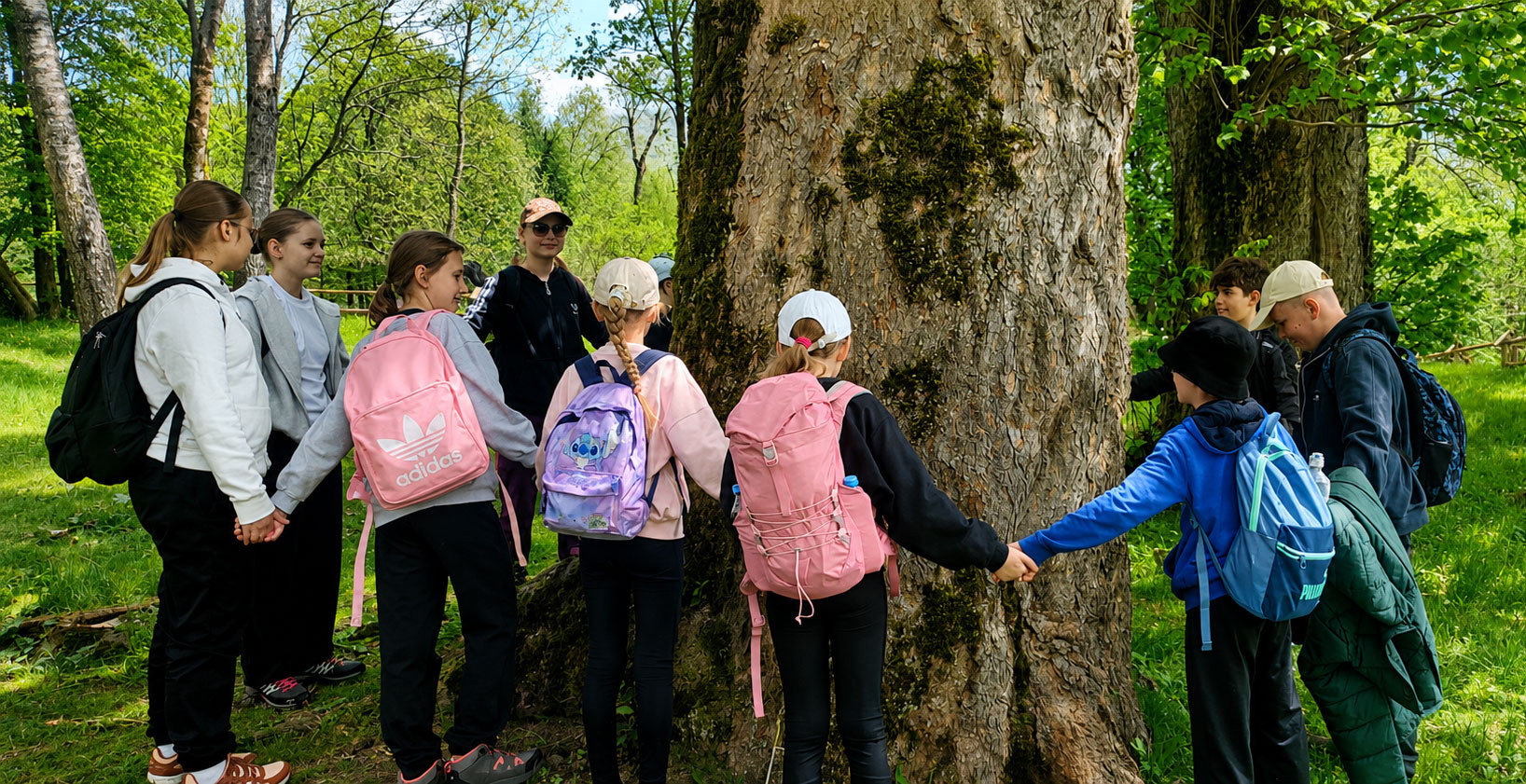
Environmental education in practice: Discover how children and young people learn about nature through PL-UA projects in our Green Lessons article series.
Installing new equipment or protecting natural areas is important, but lasting change also depends on how people think and act. Building environmental awareness takes time, and it is especially important to start at an early age.
Projects supported by the PL-UA Programme 2021-2027 address challenges such as climate change, pollution and biodiversity loss. Alongside infrastructure improvements and innovative solutions, they also use a wide range of educational activities to engage children and young people. From quizzes and games to outdoor lessons, environmental campaigns and educational materials, these initiatives show that learning about nature can be interactive, creative and practical.
Discover Green Lessons!
In Green Lessons, we will share examples of how project teams in Poland and Ukraine make environmental education part of their work. Each episode will explore a different approach and show how young people are encouraged not only to learn about the environment, but also to take an active interest in protecting it.
🌿 Coming soon: Green Lessons #1 – Quizzes, competitions and gamification
Can an environmental quiz be as exciting as a TV game show? How can a drawing competition get children thinking about climate change? The first episode will explore quizzes and creative competitions.
Stay tuned for more examples of environmental education in action!