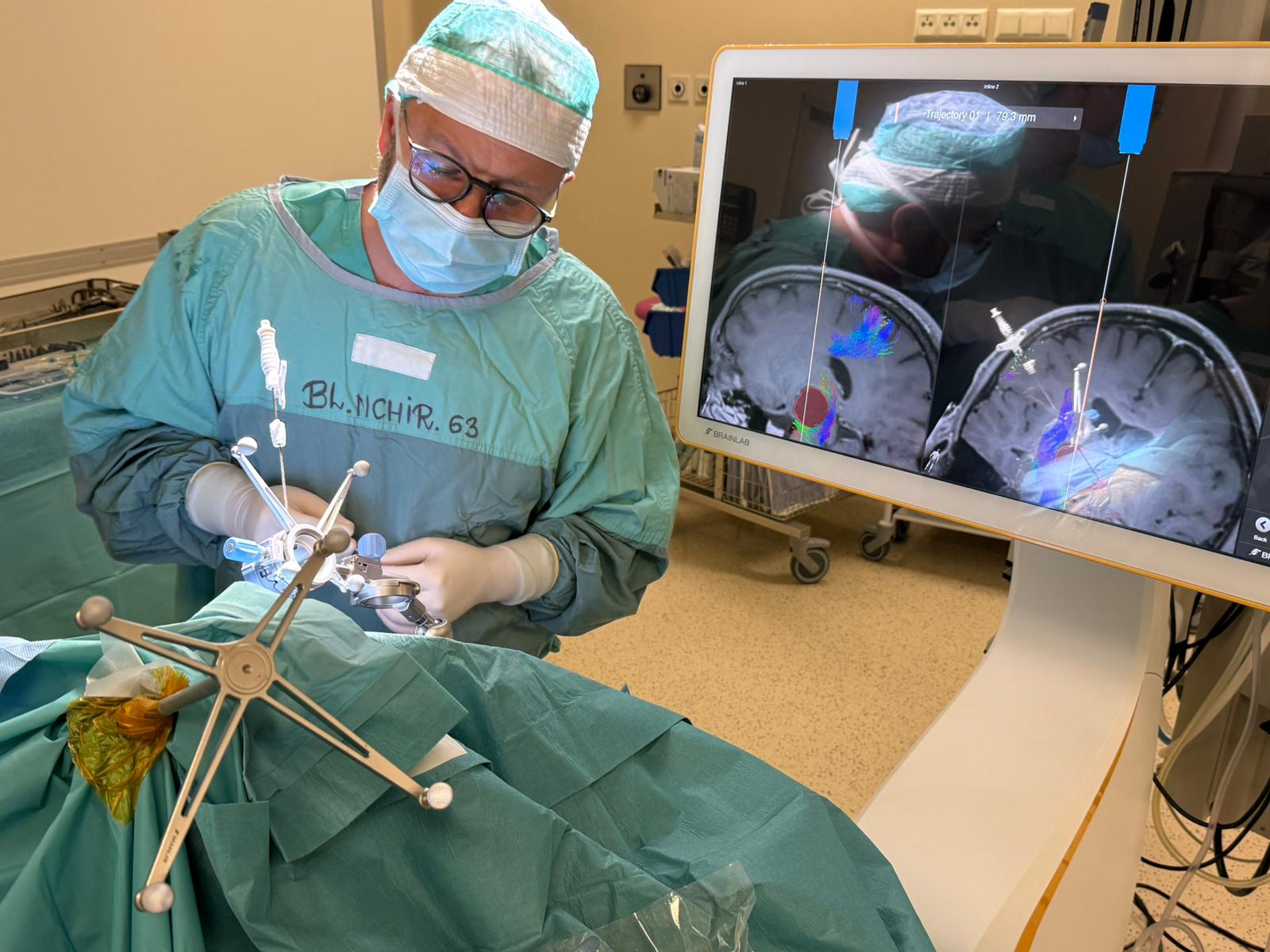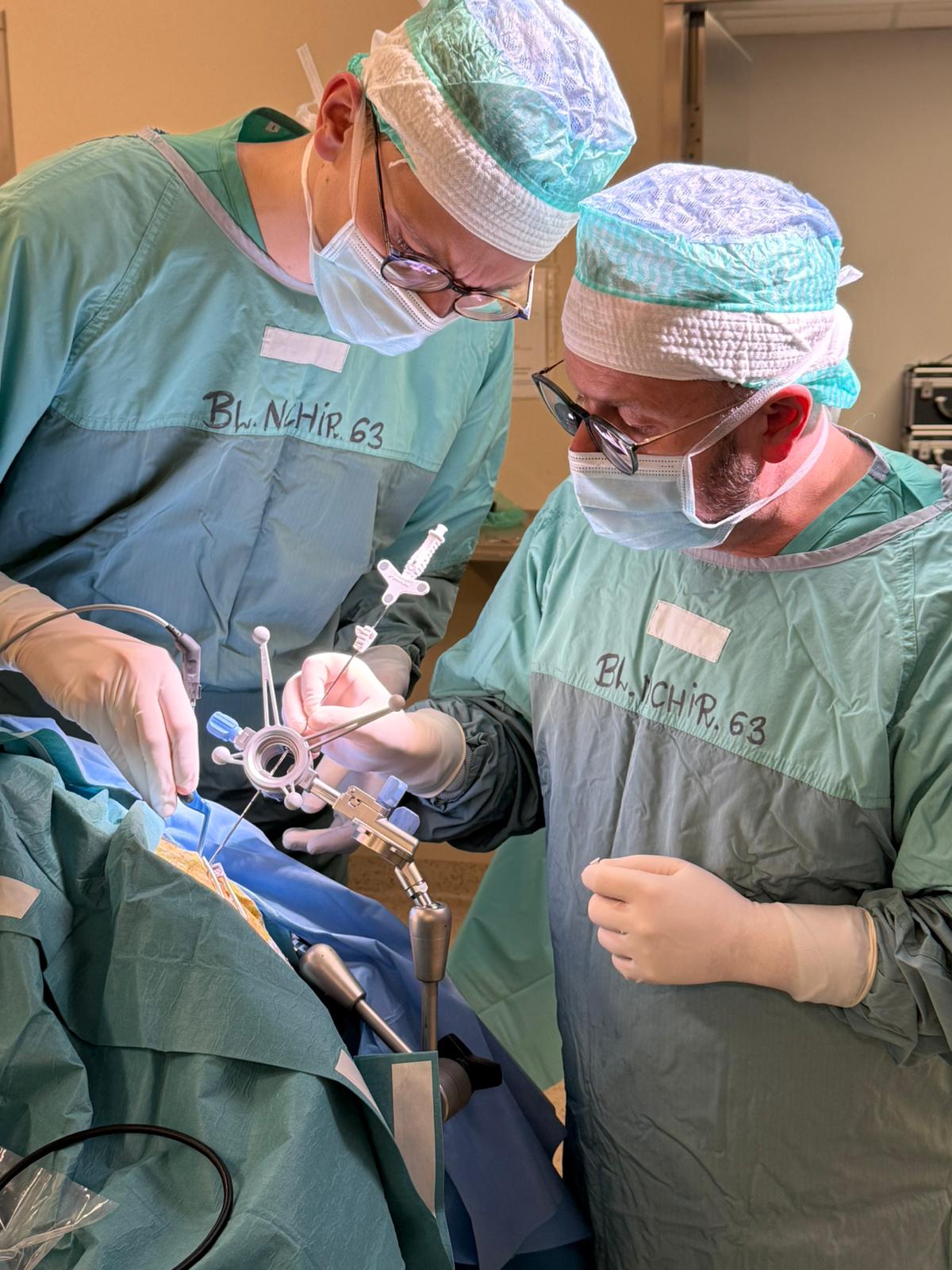
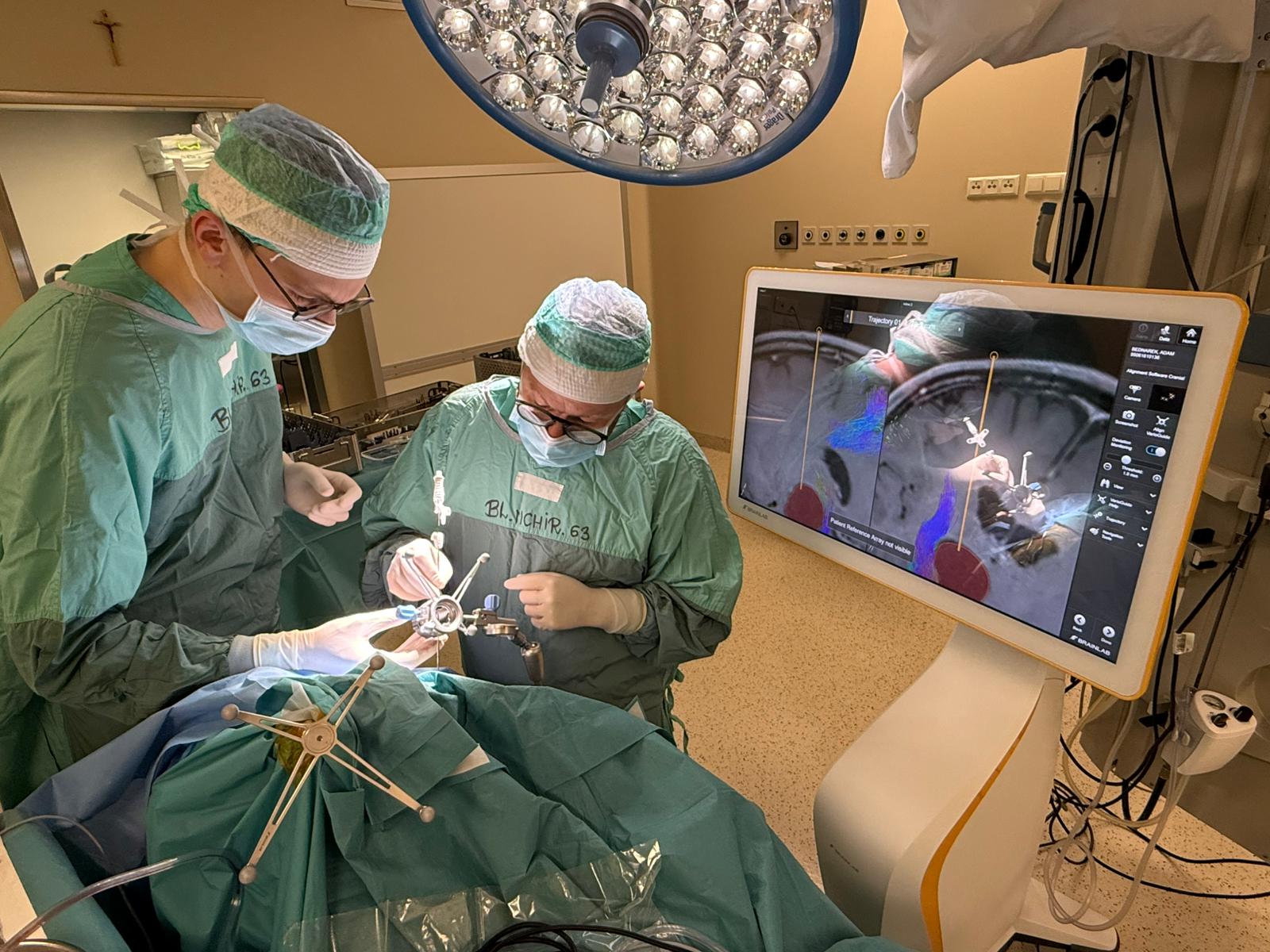
Modern equipment purchased under the PL–UA project, an unconventional approach, and a courageous decision by neurosurgeons from the University Clinical Hospital in Białystok (USK) made it possible to save the life of a 30-year-old patient. The innovative equipment was a key element in performing this exceptionally difficult surgery.
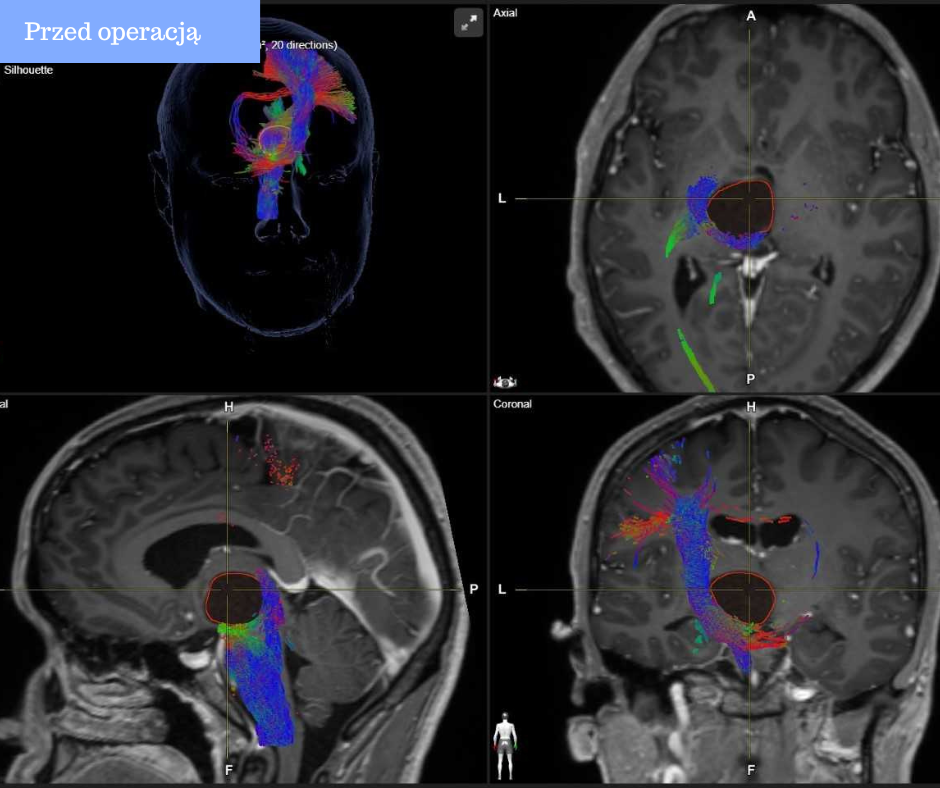
In mid-2025, Mr Adam began experiencing problems with speech. He was able to answer simple “yes” or “no” questions, but forming longer sentences became a challenge. Over time, his family noticed that he started writing like a first-grader: slowly and illegibly. He also developed vision problems and weakness in one arm. Even something as simple as opening a bottle of water became very difficult. After diagnostics in one of the hospitals, it turned out that all these symptoms were caused by a several-centimetre-long cyst located deep in the brain. The doctors proposed a highly burdensome operation involving opening the skull, entering the brain through the corpus callosum, and removing the lesion. Unfortunately, the surgery carried a very high risk of brain damage, and the doctors openly admitted that the man might have memory problems afterwards, or might even lose the ability to speak.
A needle into the lesion
The couple, however, did not give up their search for another solution. Mr Adam’s wife found online information about a patient whose brain lesion had been removed by neurosurgeons from the University Clinical Hospital (USK) through the eye socket. She also read that the Białystok Neurosurgery Clinic specialises in minimally invasive, endoscopic brain surgeries. They decided to seek an opinion in Białystok. The USK doctors qualified Mr Adam for surgery. The specialists, however, began looking for an even less invasive way to access the lesion, as they were concerned that reaching such a deeply located lesion with an endoscope could carry a high risk of neurological complications.
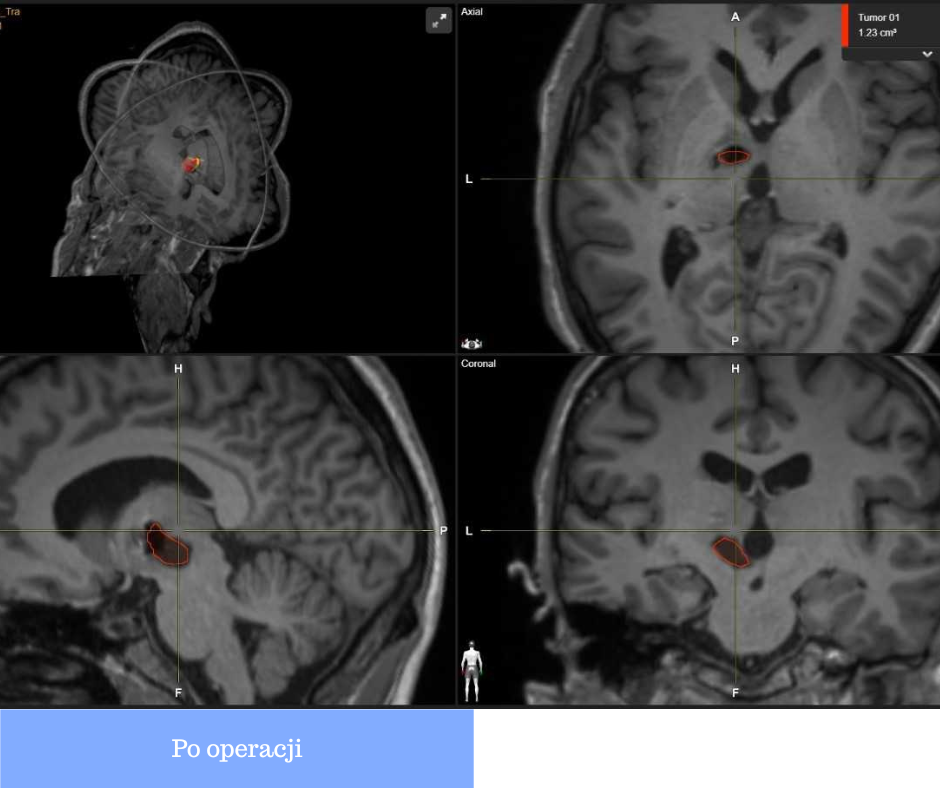
The surgery took place in October 2025. When Mr Adam woke up, his family immediately knew it had been a success.
The fluid collected during the surgery was sent for histopathological examination. The patient will require further monitoring to detect any potential recurrence of the lesion in time.
Modern technology saving lives
The USK spokeswoman, Katarzyna Malinowska-Olczyk, emphasizes that the procedure used neuronavigation, a state-of-the-art device purchased thanks to the implementation of the project “Neuroexcellence ithout borders” (acronym: NeuroExcellence) carried out under the PL-UA Programme.
Doctors from the Białystok hospital have already undergone training on the modern equipment, which arrived at USK in early autumn as part of the project. The facility was also visited by medical staff from the partner hospital in Lutsk.
Mr Adam’s case demonstrates how much of a difference properly selected, modern equipment can make in doctors’ everyday work. Thanks to the project, specialists at USK in Białystok now have the opportunity to use solutions that allow procedures to be performed in a less invasive and safer way for patients.
It is an example of how investments implemented under the PL-UA Programme improve the quality of treatment to the benefit of future patients under the care of the Białystok neurosurgery department.