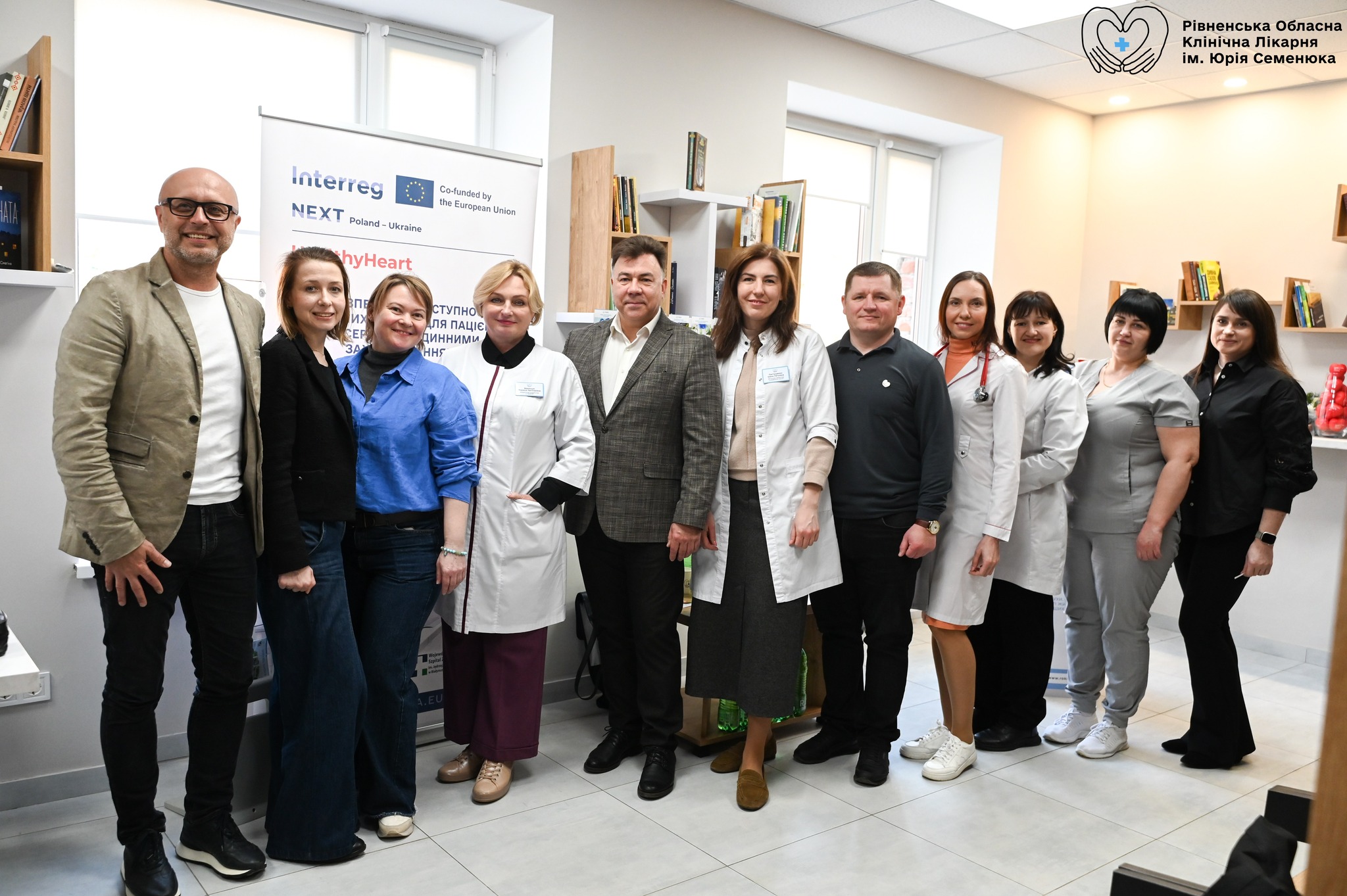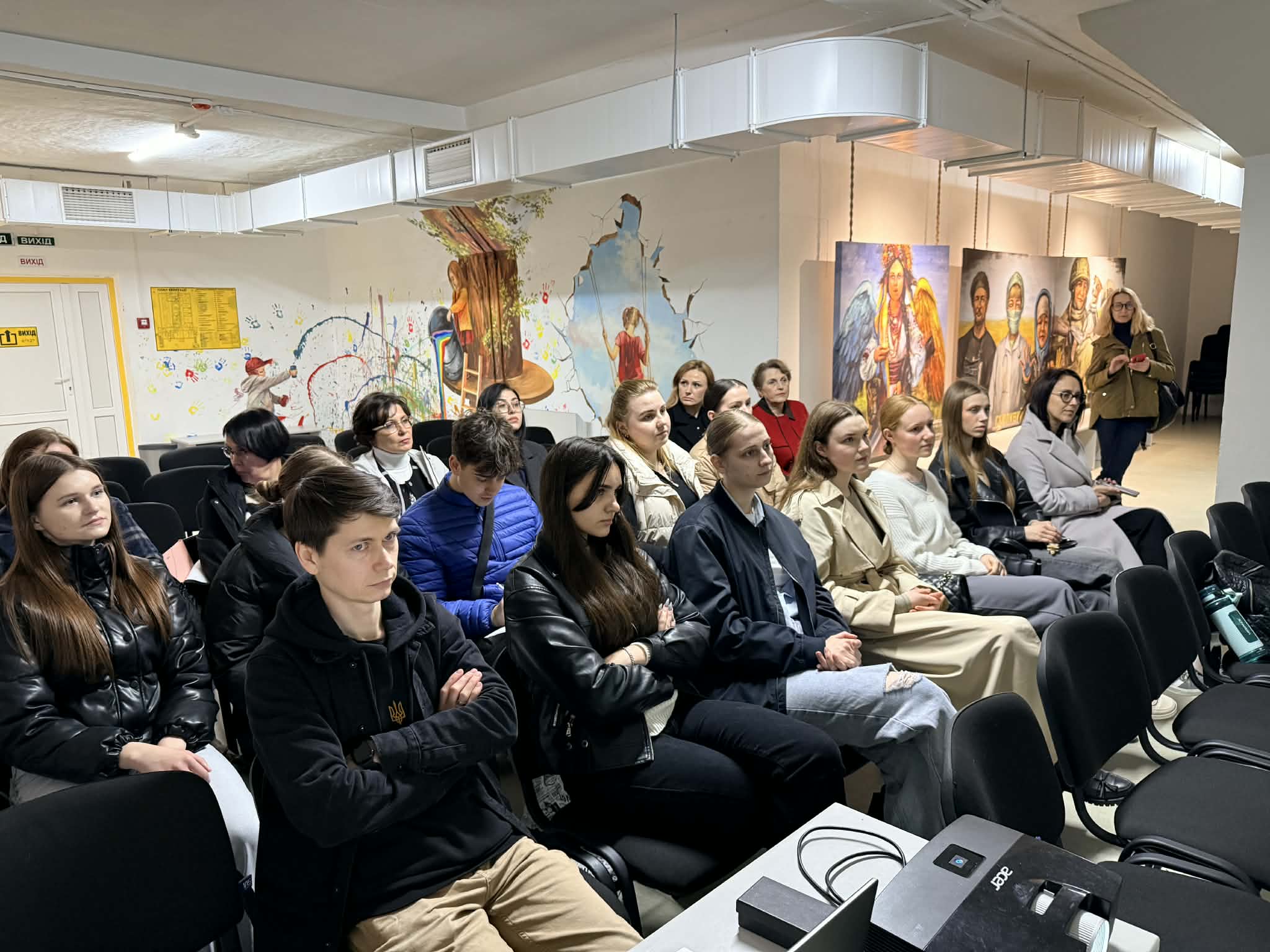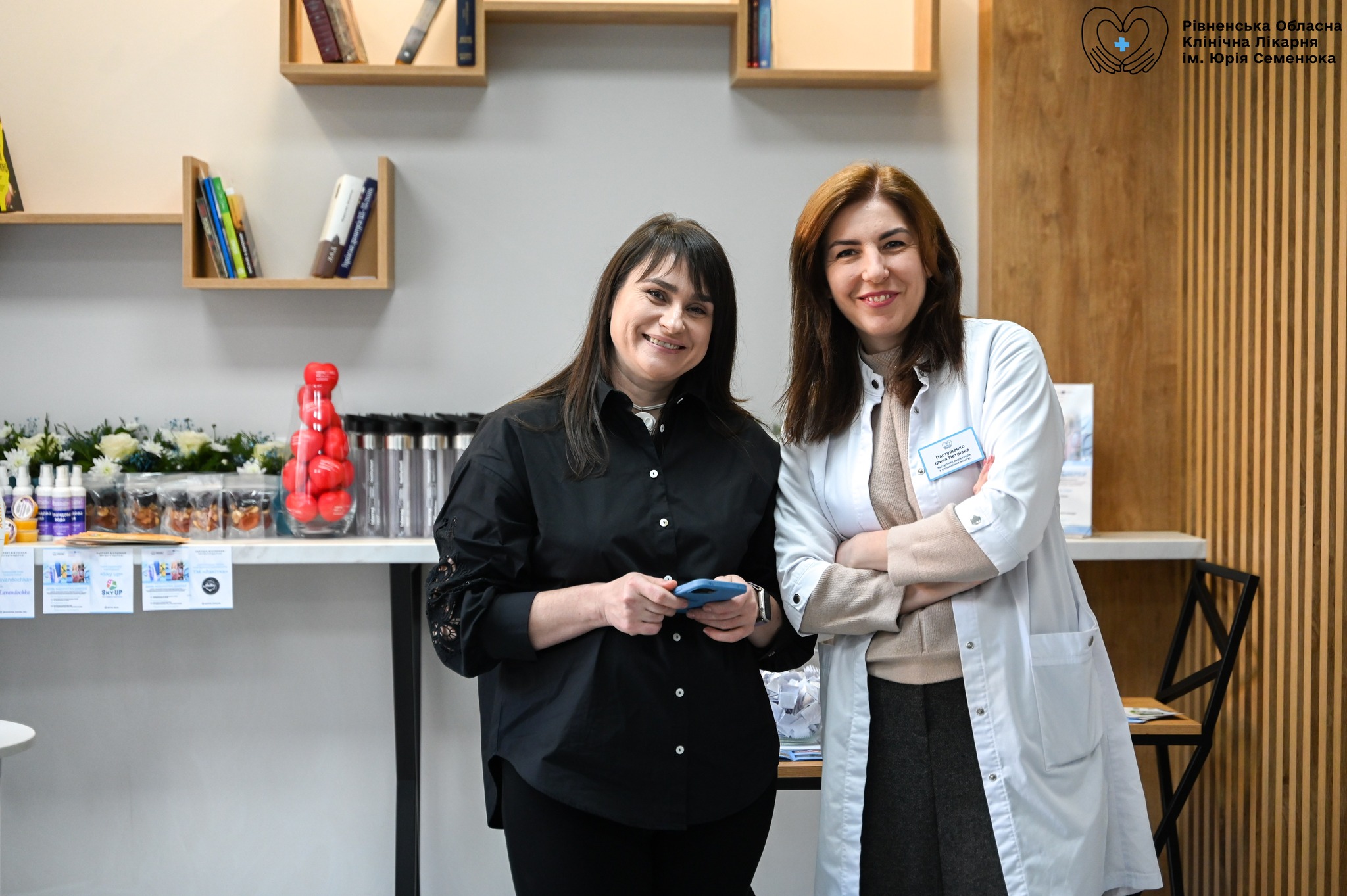
Everything is ready for the Open Day at the Rivne Regional Clinical Hospital. There’s an atmosphere of a children’s celebration in the air: a nicely decorated space, a colourful wheel of fortune and prizes neatly arranged. Visitors walking through the corridors peek into the room with curiosity. A line is gradually forming.
Oksana is a bit nervous, although organising events is nothing new for her. Before becoming the hospital’s communications specialist, she worked in the creative industry, implementing a range of cultural projects. Now she leads a team of four people who organise creative, thematic and corporate events, as well as implement diverse projects and initiatives. Two nurses and a doctor are also involved in organising today’s event.
The first visitor enters the room.
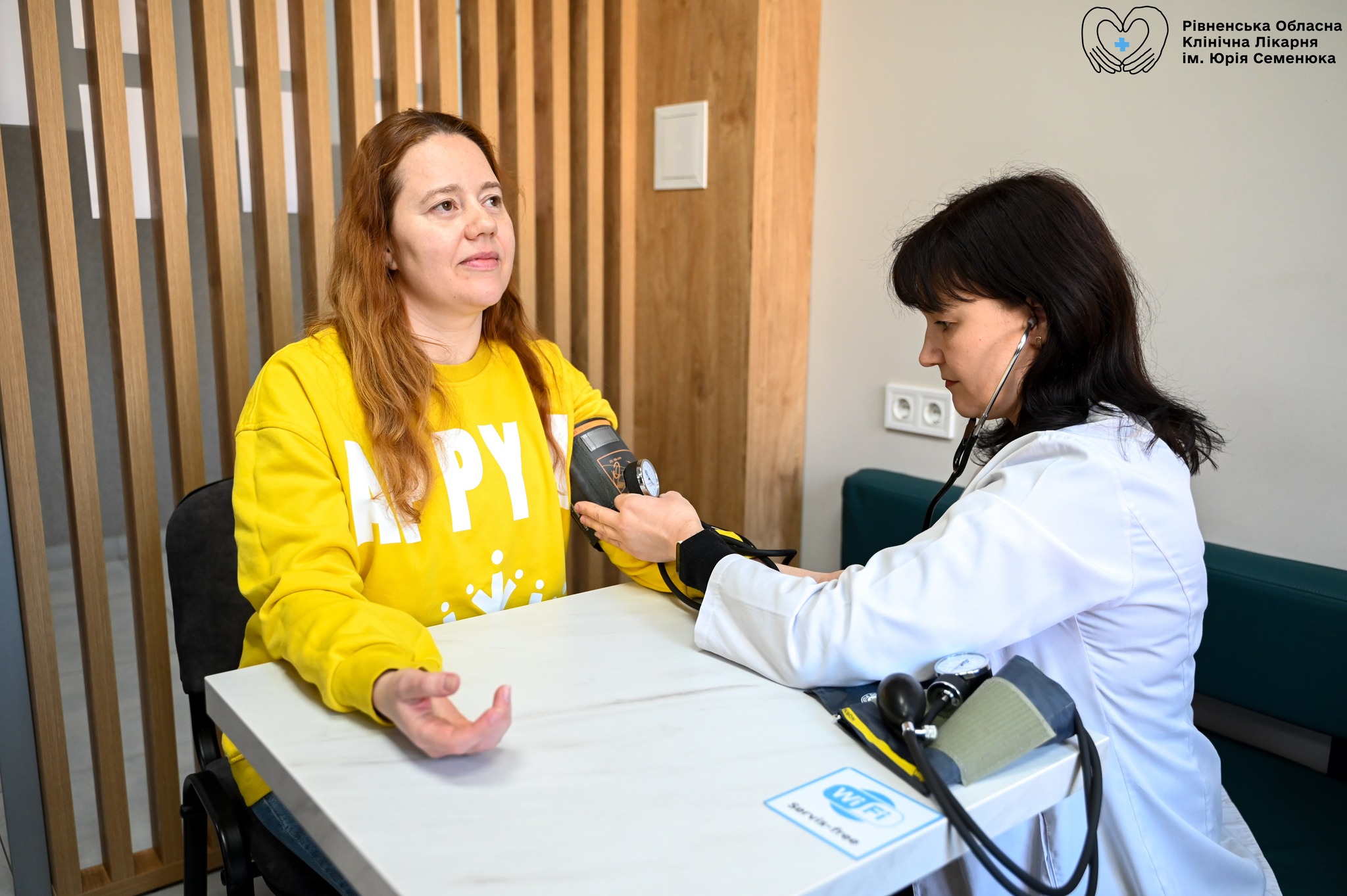
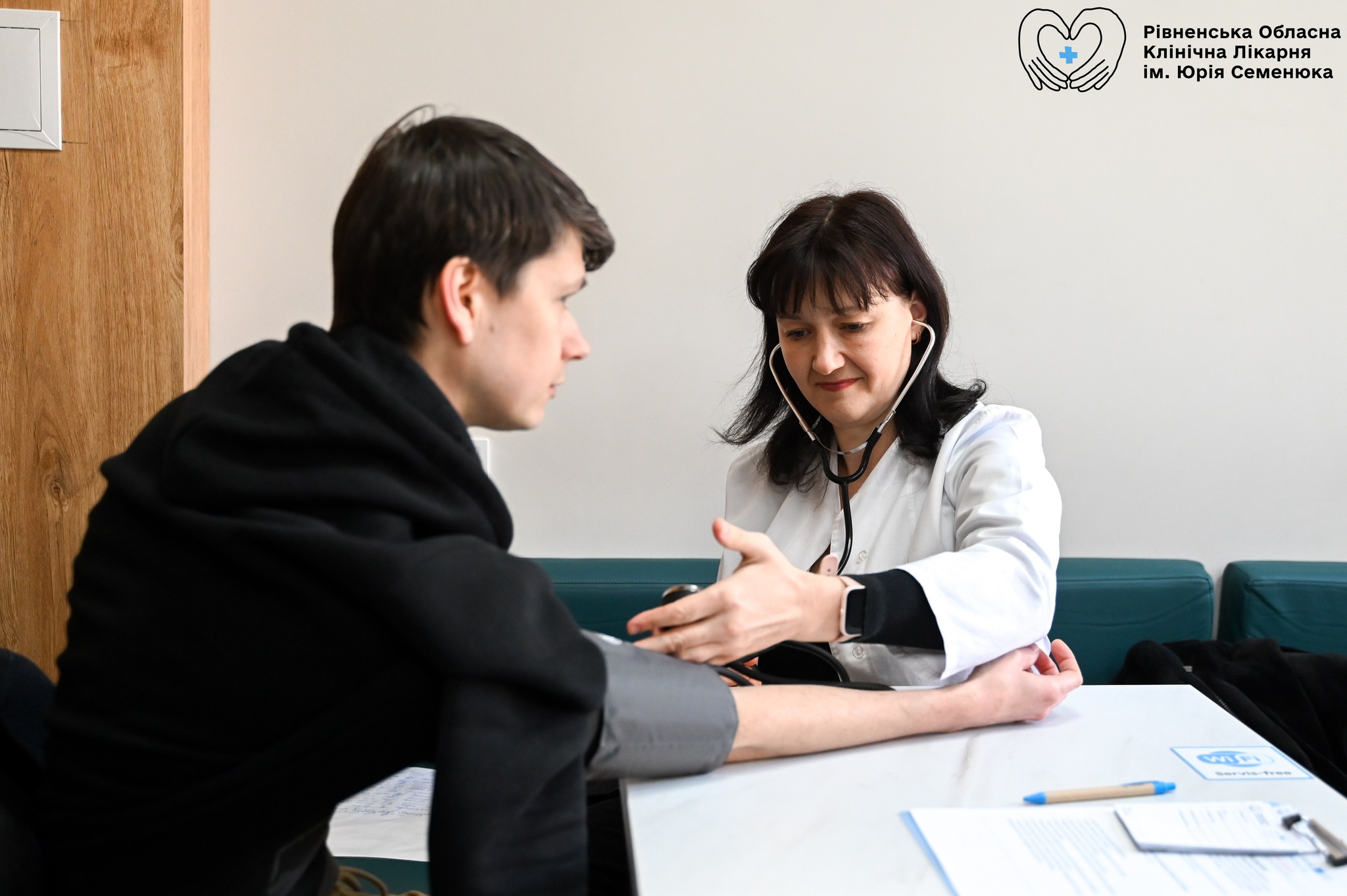
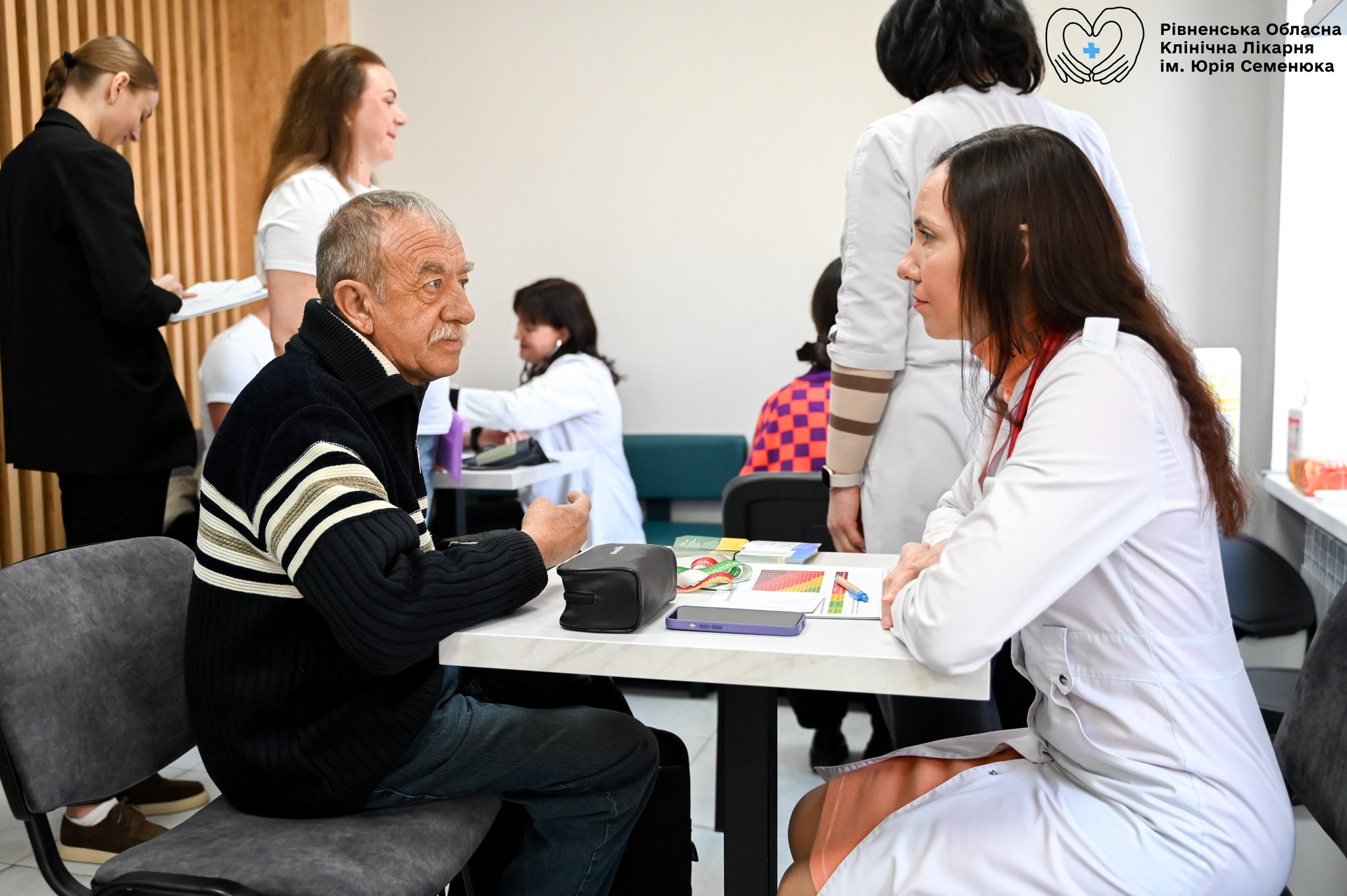
The scenario is simple: everyone has their blood pressure measured on both arms and a blood test to check sugar levels. Based on the results, a consultation with a doctor is provided, who gives recommendations and, if necessary, refers the person to a specialist. Finally comes the most interesting part – the wheel of fortune. Participants spin a wheel divided into eight segments: “movement,” “sleep,” “water,” “nutrition,” “check-up,” “emotions,” “safety,” and “rest.” The arrow lands on one of them, and the participant must answer a question related to factors affecting heart health. If the answer is correct, they draw a slip with a prize. However, the secret is that everyone wins: each answer is complemented with explanations and recommendations from the host. As a result, everyone leaves not only with a pleasant gift, but also with valuable knowledge that helps protect health.
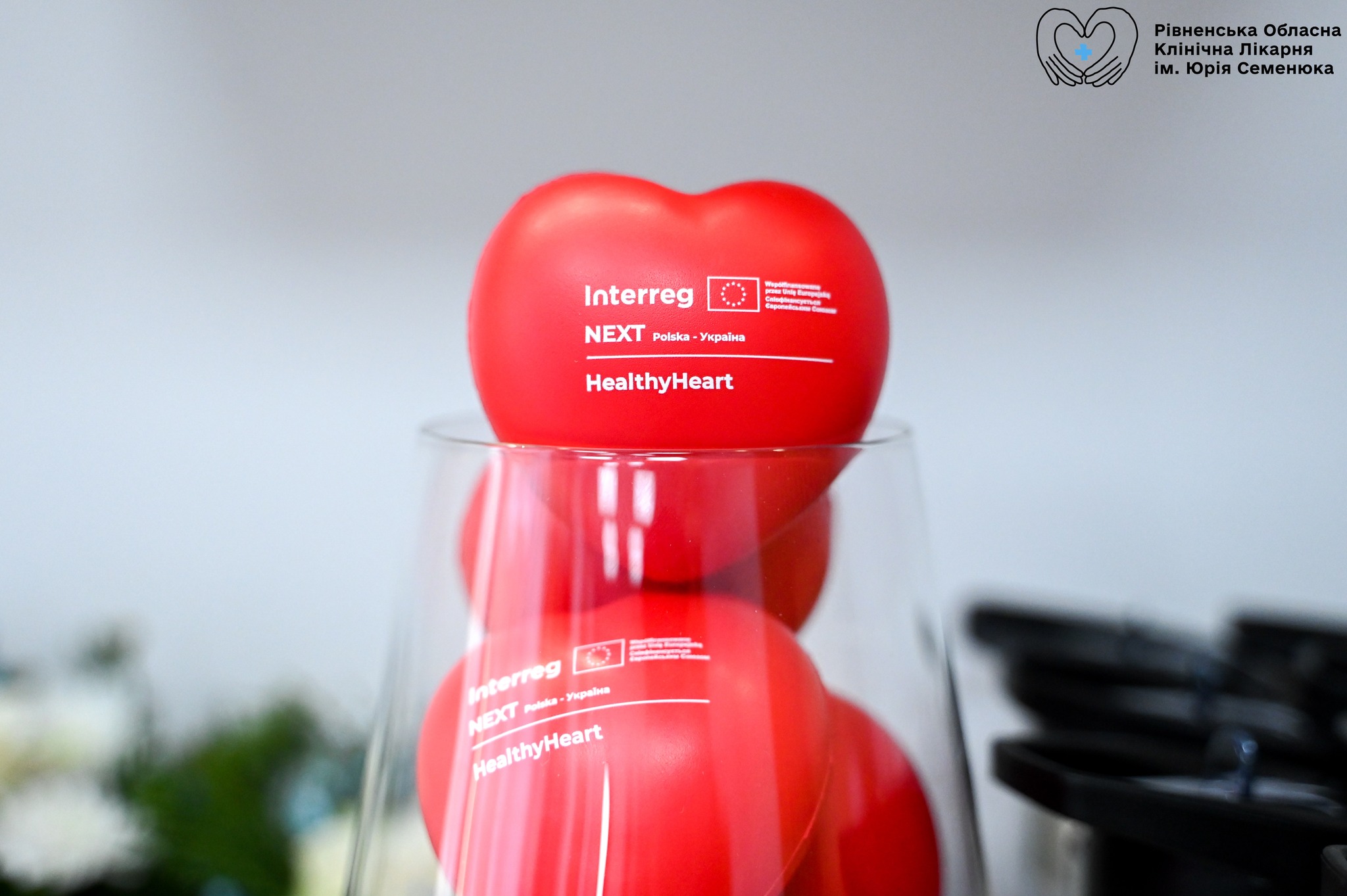
The Open Day is part of the HealthyHeart project, implemented jointly with the Jędrzej Śniadecki Voivodeship Polyclinical Hospital in Białystok. The project aims to improve access to medical services for the diagnosis and treatment of cardiovascular diseases. It includes the purchase of specialised equipment, the exchange of medical knowledge, and the organisation of preventive activities in hospitals in Białystok and Rivne. In particular, in Rivne, the operating unit of the Regional Center for Vascular and Endovascular Surgery will be renovated, and an angiographic interventional system will be installed.
Larysa Vereshchuk, a cardiologist and the Head of the Regional Cardiology Center, shares statistics on cardiovascular diseases: they account for 60% of all deaths in Ukraine, the highest rate in Europe. Each year, more than 400,000 people die from cardiovascular diseases. The impact of the war is also significant – constant stress and delayed treatment have considerably “rejuvenated” these conditions. Awareness and prevention remain crucial: nearly 35% of the adult population in Ukraine has high blood pressure, but only half of them are aware of it. Doctors call arterial hypertension a “silent killer.”
Nevertheless, how can this information be effectively communicated to people? How can caring for health become part of everyday life? At the Rivne Regional Clinical Hospital, this is a mission not only for doctors but also for communications professionals.
Oksana believes that information must work cumulatively to achieve results.
But it’s not just about information. Both communications specialists and medical professionals are convinced that a hospital should be a space of trust and support – one that transforms anxiety into comfort. This is supported by various events, the organisation of patients’ leisure, thoughtful space design, and even visual details. A gloomy hospital environment can worsen a person’s condition and complicate treatment. The environment matters, and timely communication can save lives.