
When learning takes the form of a game, motivation comes more easily and knowledge sticks better. In the first episode of the “Green Lessons” series, we show how projects of the Interreg NEXT Poland-Ukraine Programme use quizzes, competitions, outdoor games and board games in environmental education for children and young people.
A quiz just like on TV
The WildInCity project, which focuses on developing and modernising green areas in Rzeszów and Lutsk, organised the largest in-person environmental quiz in the Programme. The competition followed the format of the well-known TV game show “Who Wants to Be a Millionaire?”.
Secondary school students aged 15–17 competed in two semi-finals, one in Poland and one in Ukraine. In Lutsk, 38 teams took part, and in Rzeszów 24, making almost 200 participants in total. The questions covered wildlife, biodiversity, protected areas, the European Natura 2000 network and the Emerald Network in Ukraine.
The five best teams from each country advanced to the final, held in Rzeszów in May 2025. Ten teams of three took part. The quiz was therefore not only a test of knowledge, but also an opportunity for young people from both sides of the border to meet and connect.
How would you do on a quiz question? What makes the lynx different from other wild cats?
a) It can purr
b) It feeds on plants
c) It lives a solitary life
d) It likes swimming.
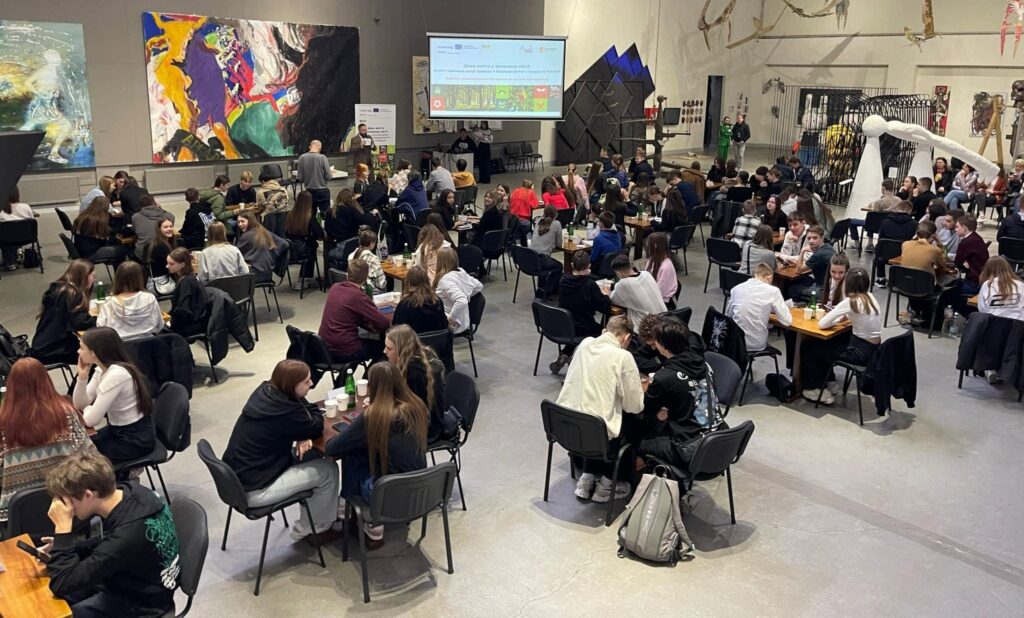
Semi-final in Lutsk
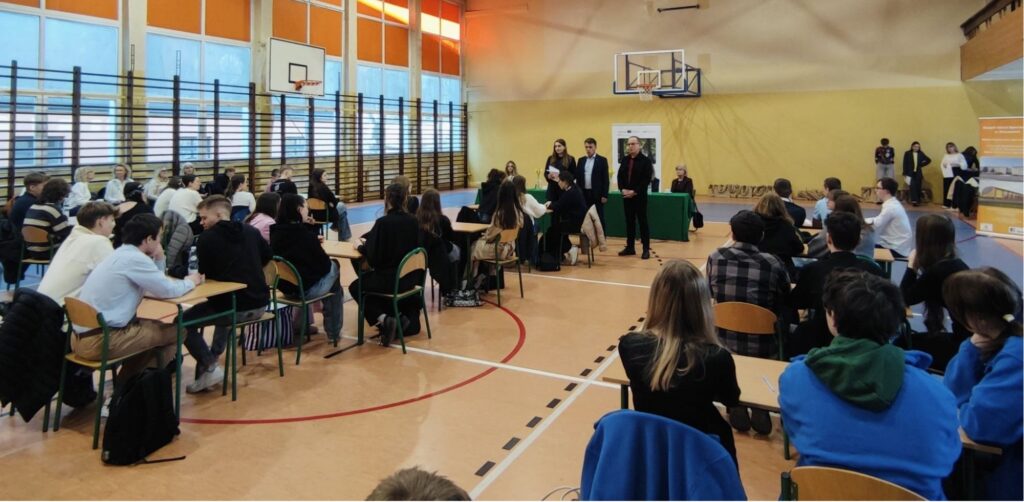
Semi-final in Rzeszow
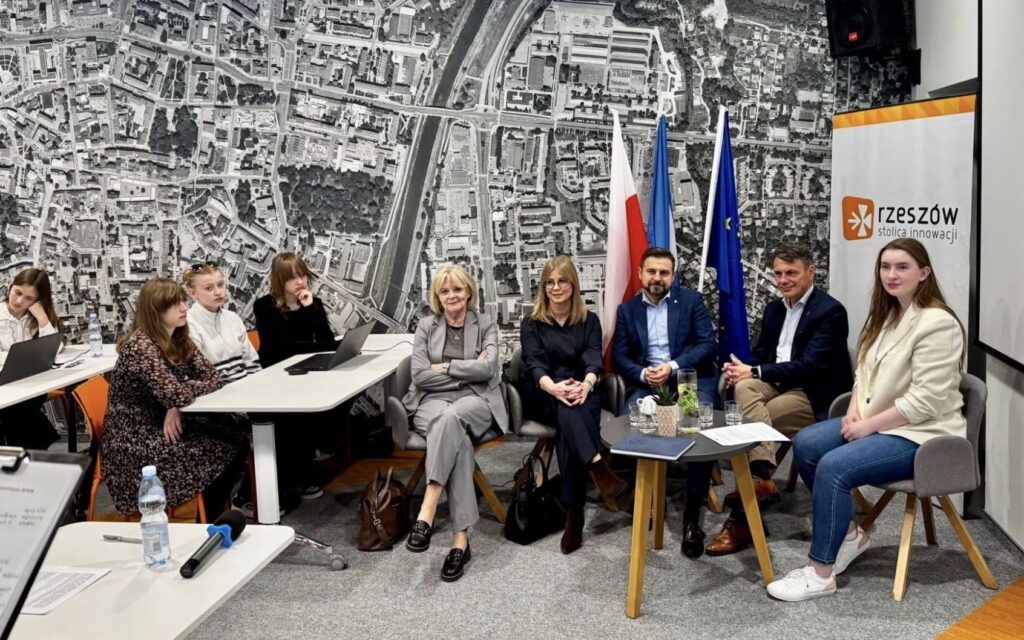
Final in Rzeszów
Art and photography competitions
Competitions show that nature can be talked about in more ways than just words.
The town of Garwolin is running the educational campaign “Water Is Life. Protect Every Drop”, which began in March 2026. It included two competitions for children and young people, organised under the Interreg4Water project. The project aims to improve the cross-border environmental protection system in Garwolin, the municipality of Mokobody and the Ukrainian town of Brody.
- The photography competition “Life in Every Drop” was open to people up to 18 years of age. Each participant could submit one photo. Twenty-three entries were received, showing the beauty of nature, the role of water in the ecosystem and its presence in the world around us. The jury assessed creativity, aesthetics and environmental message. The best photos are to appear in the project calendar, and the authors received prizes.
- The art competition “Let’s Save Water” was aimed at preschool children and primary school pupils from Garwolin, in three age categories. Each participant could send one work to the City Hall. Ninety-one entries were received. Prizes were awarded for 1st, 2nd and 3rd place in each category, and all participants received certificates. The best works are to be displayed at exhibitions and used in the town’s promotional materials, including postcards.
The results of both competitions were announced and the prizes presented during the Children’s Eco Picnic in Garwolin.
In the municipality of Lesko, as part of the RiverCare project, which works to protect water resources in the municipality of Lesko and the city of Chust, pupils aged 6–15 created posters promoting water saving. There were no restrictions on technique: drawing, appliqué (gluing on various materials) and collage were all allowed. The young participants submitted 56 works. The two winning posters were printed and used in the municipal environmental campaign, so the message created by children reached a wide audience of residents.
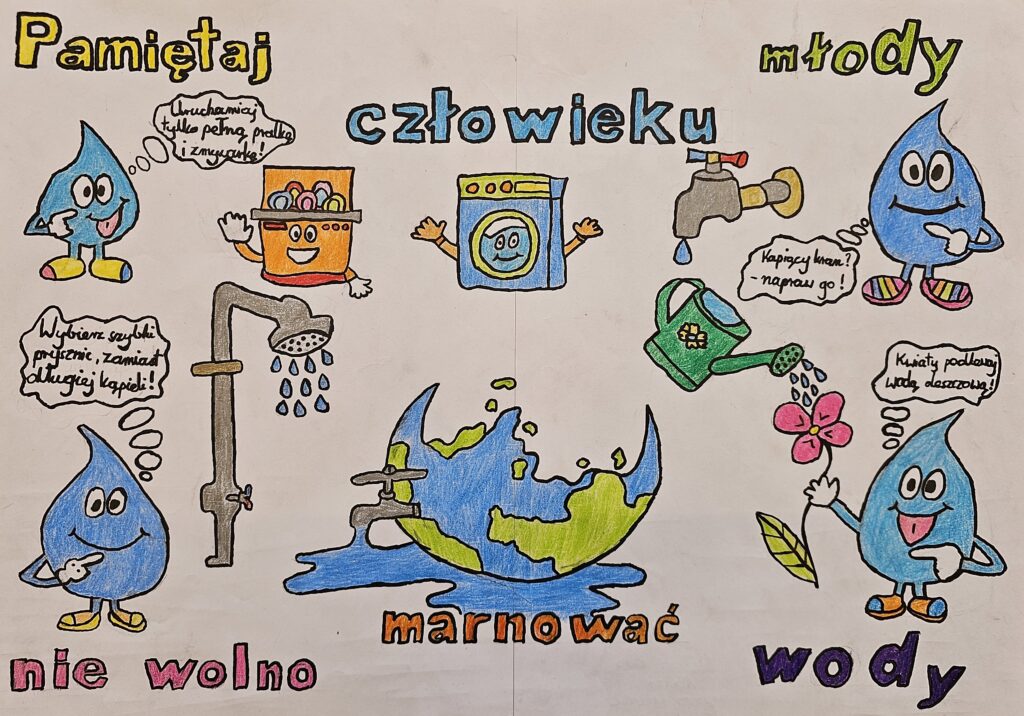
Competition artwork
In the AquaGuard project, which covers the construction of infrastructure and the purchase of equipment for disaster management in Lelis and Skole, 60 pupils took part in the drawing competition “Climate Person”. Their works showed how differently children perceive environmental problems and how they express emotions through colours and shapes. It is hard to resist the impression that every participant deserved first place.
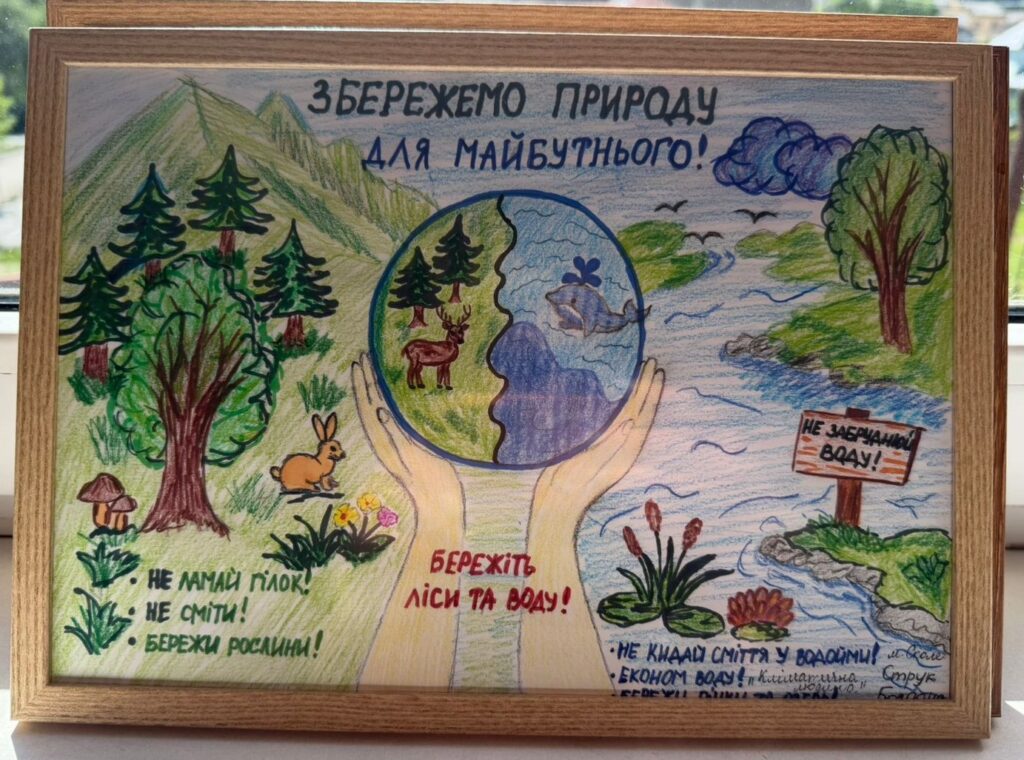
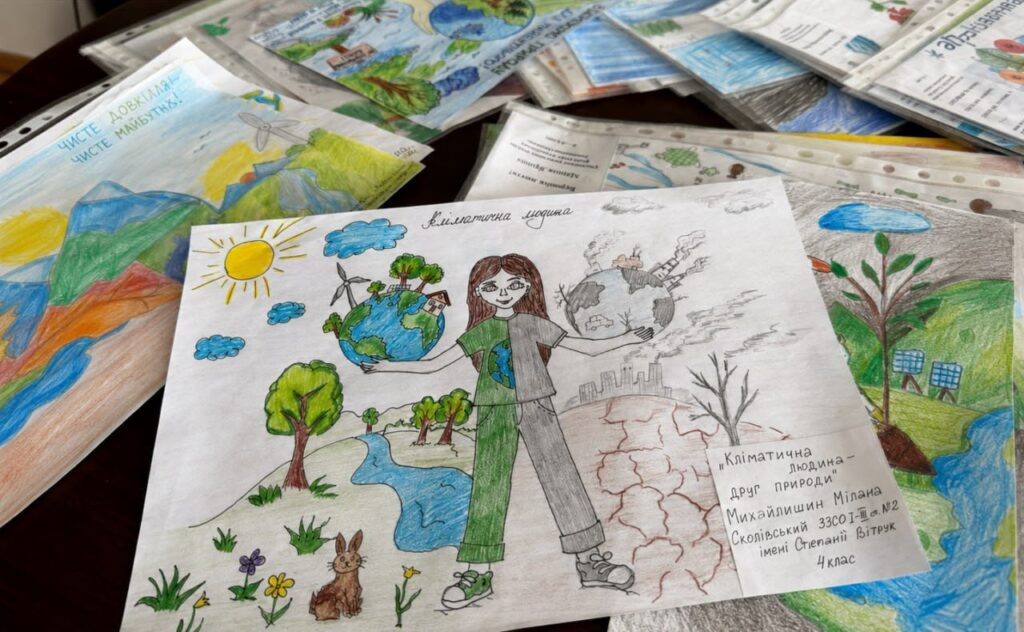
Competition artworks
In the CBBC project, in which the Nobel Nature Park and the Narew National Park are creating a system for monitoring biodiversity in cross-border protected areas, an educational competition called “Through the Eyes of a Young Observer” was held. It was aimed at children and young people, and its goal was to develop an interest in birds and raise awareness of the importance of monitoring and protecting biodiversity. Participants, divided into age categories, presented their knowledge and interest in nature through artworks and comics.
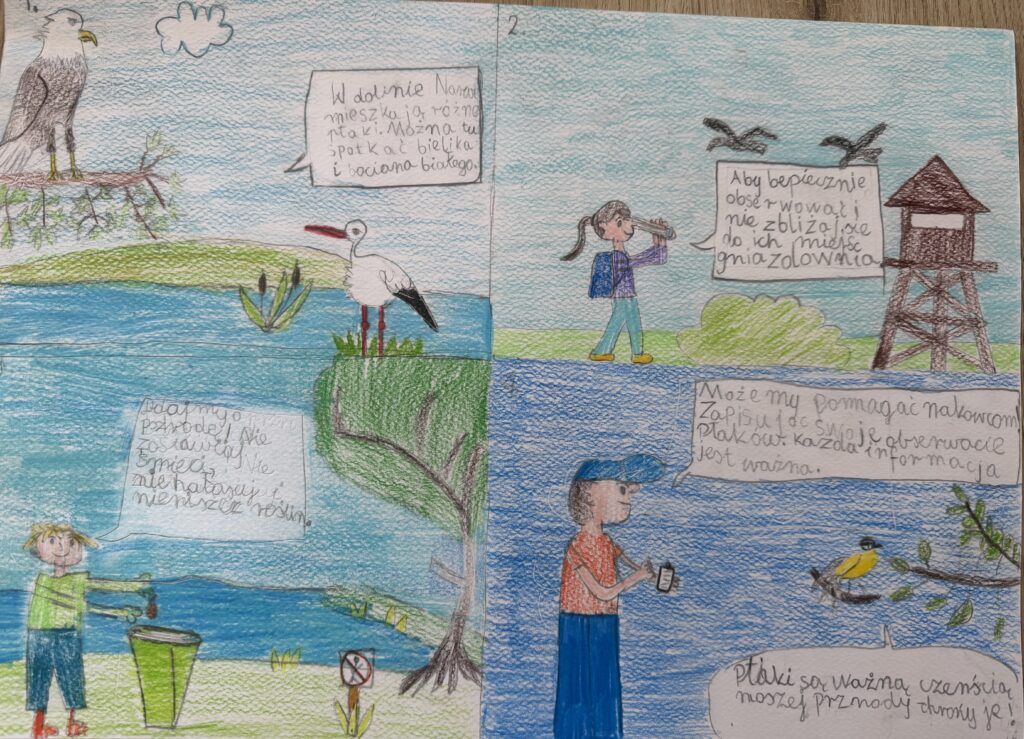
Competition comic
Outdoor games and quests
In Tarnobrzeg, the EcoParks project, dedicated to the historic parks in Vyshnivets (Ukraine) and Tarnobrzeg itself, included environmental education in the family event “Easter Adventure”. In March 2026, the city park hosted the outdoor game “Easter Bunny’s ECO Mission – Let’s Keep Dzików Park Clean”. Participants followed the Easter Bunny Trail and solved tasks and puzzles placed around the park. Along the way, they learned the principles of waste sorting and why it is worth keeping city parks clean.
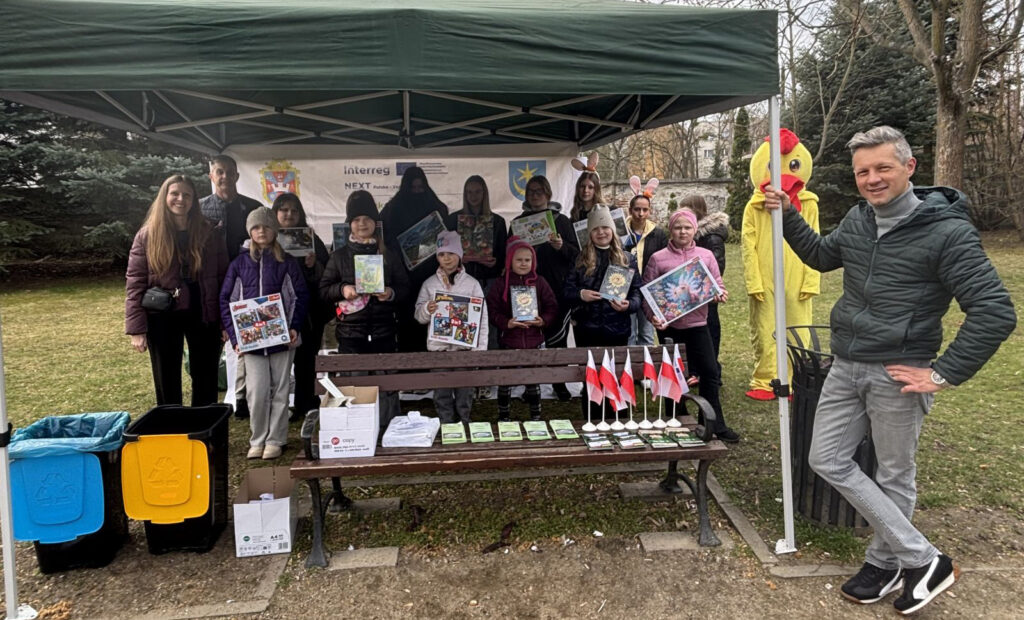
Game participants
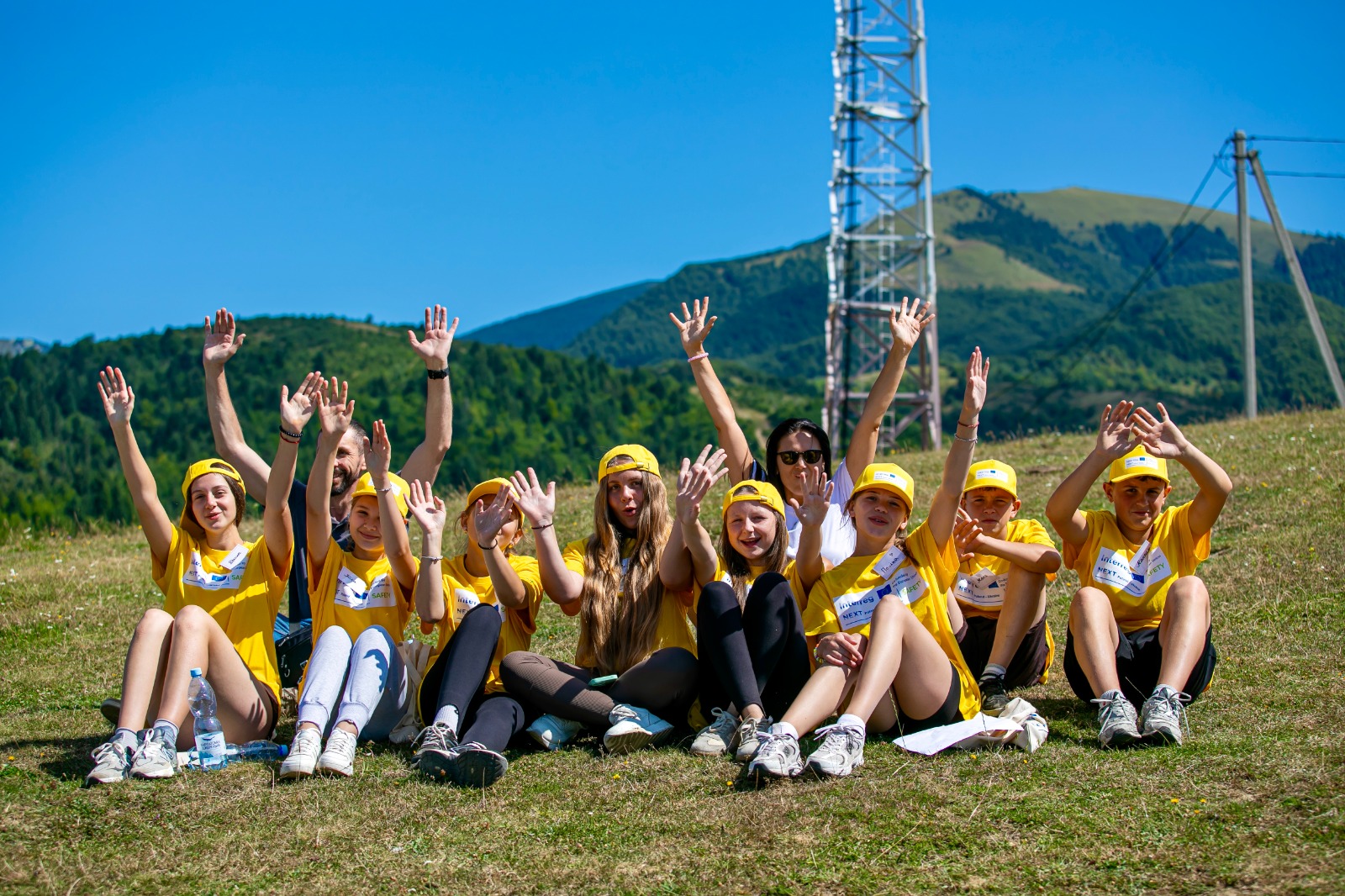
In Kolochava, the SAFETY project, in which Polish and Ukrainian partners work together for safety in the cross-border area, organised the competition and quest “Young Rescuer”. Teams followed mountain trails, solved tasks and tested their skills in responding to emergencies. This is knowledge that may one day save a life or protect someone’s health.
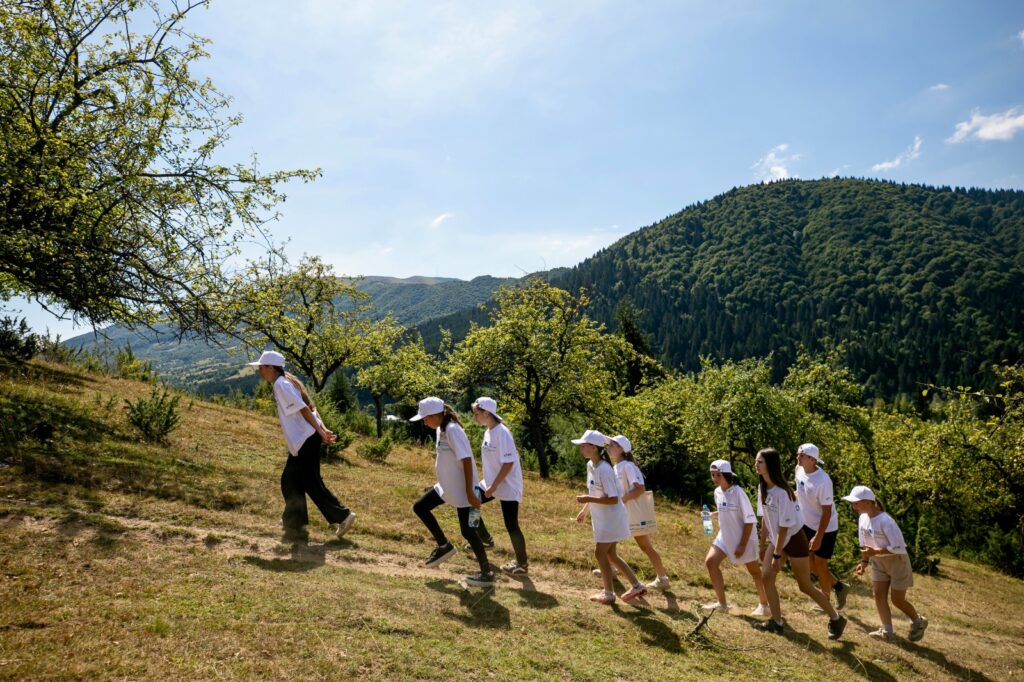
Quest participants
Board games and a film competition
Board games show that learning does not always need a screen.
In the SafeSewerage project, which improves the sewerage system in Lutsk and Białystok, a giant XXL board game was created for the campaign “The Sewer Is Not a Bin”. Białystok Waterworks uses it during workshops at local educational institutions. Children aged 5–12 learn what must not be flushed down the toilet, what happens when it is, how a wastewater treatment plant works and how to save water every day.
The CleanBug project, in which the municipality of Drohiczyn and the Dobrotvir Town Council work together to protect the biodiversity of the Bug River Valley, produced the board game “The Bug River and Its Tributaries”. It also organised a social media film competition on protecting the Bug Valley. Winners were chosen on the basis of the number of positive reactions, and the prizes were items that encourage active leisure: a SUP board with equipment and a life jacket, an inflatable kayak and a tourist set.
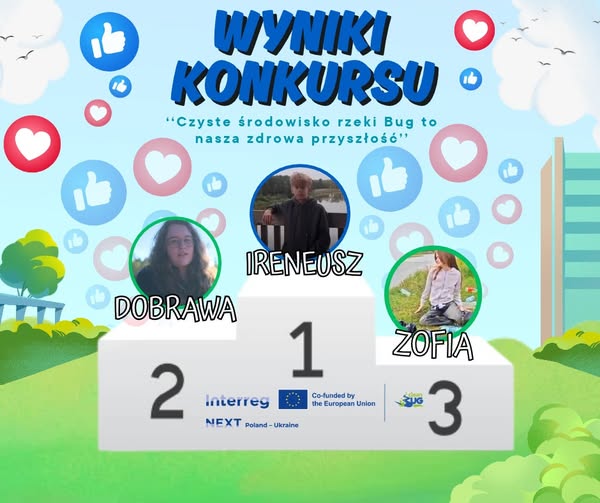
Competition winners
The competition videos can be watched on the project’s Facebook profile. You will also find more information about the competition there.
What’s next?
Quizzes, competitions and games are only one direction of environmental education in our Programme. In the next episode, we will present educational films and digital content.