It all began with residents talking about the need to ‘do something about the water’. These comments were made during village meetings and in everyday conversations. The need to improve water quality and introduce modern sewerage systems had long been highlighted by local communities – as the partners recall today.
It was these voices that laid the foundations for the cross-border Interreg4Water project. Without grand declarations or fine words – but rather with a sense that ‘if not now, then when? ’
Origin of the idea
Climate change, mounting environmental problems and outdated infrastructure have made the need for joint action both real and urgent. As the project partners say, ‘surface and groundwater know no administrative boundaries’. In hindsight, the involvement of Mazovia and the regional Marshal in initiating cooperation for the future project proved to be a key moment. On the Polish side, the Garwolin Town and the Mokobody Commune are responsible for its implementation. The Ukrainian partners are the Brody Town and the Association of Self-Governments ‘Euroregion Carpathians-Ukraine’, which, given its experience, has undertaken to carry out educational activities.
Projects are usually carried out by institutions, but in this case, it is completely different: the project is being carried out by people! The team consists of local government officials, technical specialists, engineers and those coordinating international cooperation. They all agree that cultural or administrative differences have never been a barrier.
The ground-breaking ceremony
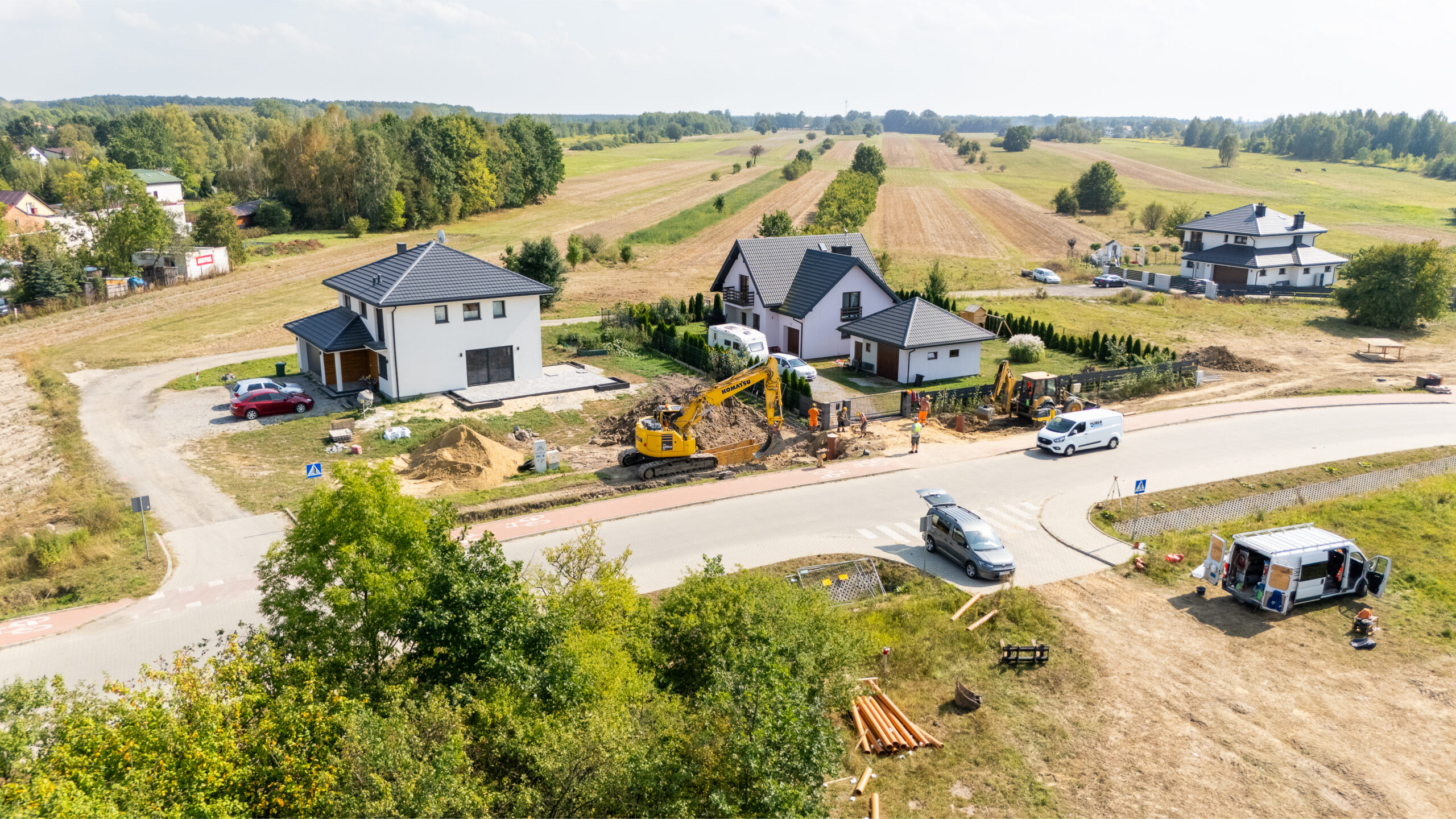
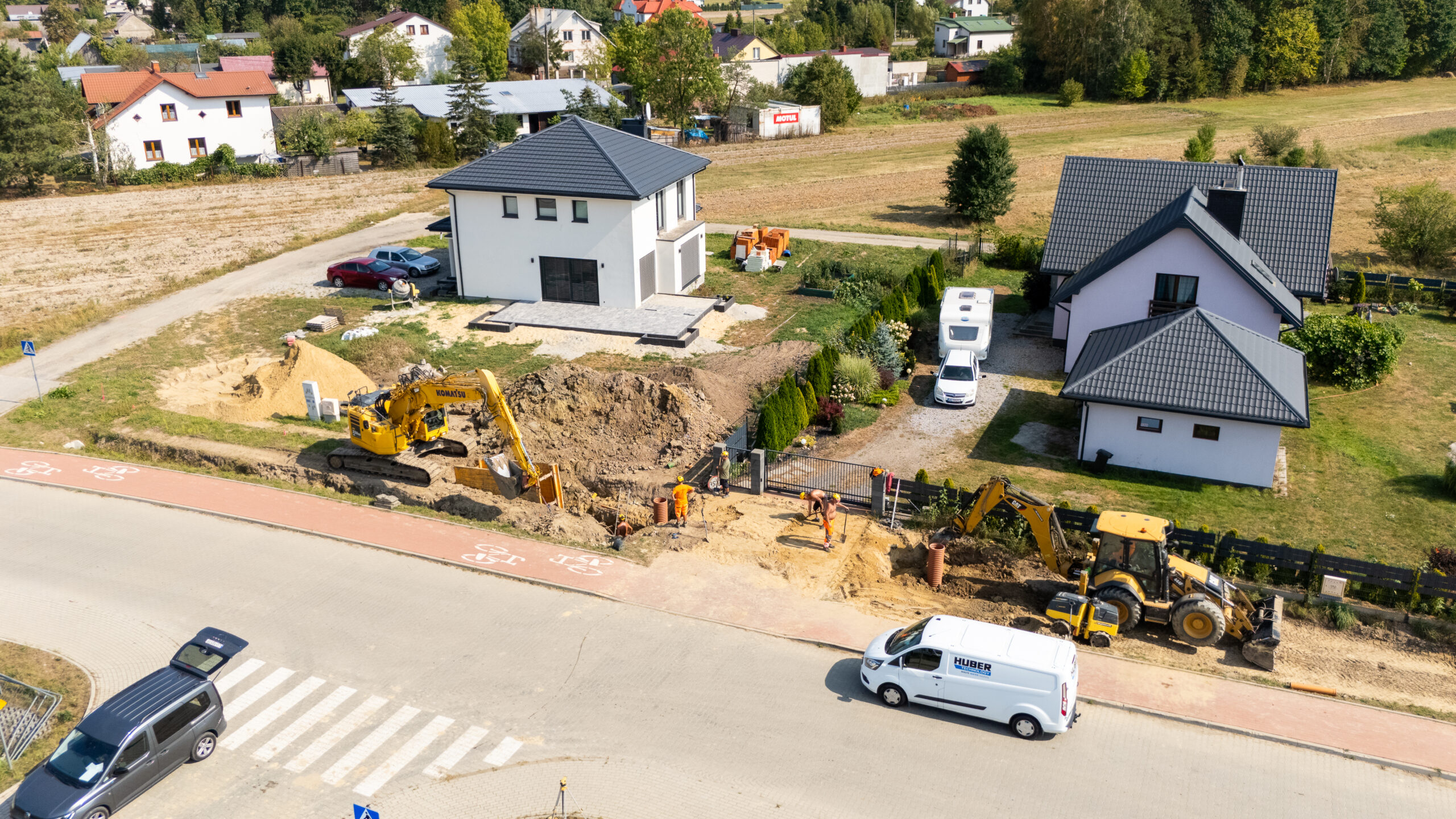
Preparations for the project took months, but it was the proverbial ground-breaking ceremony, which marked the start of construction work on the Polish side, that made the greatest impression on the project team. As part of the project in Garwolin, a sewerage network is planned – involving the construction of 123 manholes and 280 metres of connection pipes – which will collect wastewater from the internal sewerage network and discharge it into the municipal sewerage system. The total length of the project is approximately 3 km, of which around 80% of the work had been completed by the end of December 2025. Construction work is also underway in the villages of Mokobody, Niwiski, Zaliwie-Szpinki and Wólka Proszewska, where a sewerage network with a total length of nearly 5 km is being built.
On the Ukrainian side, in the town of Brody, plans are in place to rebuild and modernise the sewage treatment plant. Preparations are currently underway to commence construction work. The control cabinets purchased as part of the project have already arrived at the treatment plant, and the pumps will also be delivered shortly. In addition, there are plans to modernise an 800-metre-long pipeline running from the sewerage network to the sewage treatment plant, which will improve the efficiency of the entire system.
The project reduces the risk of water pollution and improves the state of the aquatic environment, which in the long term contributes to a healthier environment, the partners emphasise. However, changes are taking place in other areas too. A significant outcome of the project is the growing involvement of local people. Residents are increasingly asking questions, showing interest and making comments. There is also a noticeable increase in interest in environmental issues among the local communities in both regions.
The Interreg4Water project will run until 30th September 2026. Although it is entering its final phase, the partners have no plans to end their collaboration. Further activities are planned in the areas of waste management, energy efficiency and environmental education.